Sunday, June 19, 2016

Practice as Research - Literature

  • Visualizing Research: A Guide To The Research Process In Art And Design

  • Authors - Carole Gray, Julian Malins
  • Publisher - Ashgate Pub Ltd
  • ISBN - 9780754635772
  • Date - December 31, 2004
  • Abstract
  • Visualizing Research guides postgraduate students in art and design through the development and implementation of a research project, using the metaphor of a 'journey of exploration'. For use with a formal programme of study, from masters to doctoral level, the book derives from the creative relationship between research, practice and teaching in art and design. It extends generic research processes into practice-based approaches more relevant to artists and designers, introducing wherever possible visual, interactive and collaborative methods. The Introduction and Chapter 1 'Planning the Journey' define the concept and value of 'practice-based' formal research, tracking the debate around its development and explaining key concepts and terminology. 'Mapping the Terrain' then describes methods of contextualizing research in art and design (the contextual review, using reference material); 'Locating Your Position' and 'Crossing the Terrain' guide the reader through the stages of identifying an appropriate research question and methodological approach, writing the proposal and managing research information. Methods of evaluation and analysis are explored, and finally strategies for reporting and communicating research findings are suggested. Appendices and a glossary are also included. Visualizing Research draws on the experience of researchers in different contexts and includes case studies of real projects. Although written primarily for postgraduate students, research supervisors, managers and academic staff in art and design and related areas, such as architecture and media studies, will find this a valuable research reference. An accompanying website www.visualizingresearch.info includes multimedia and other resources that complement the book.


Friday, March 18, 2016

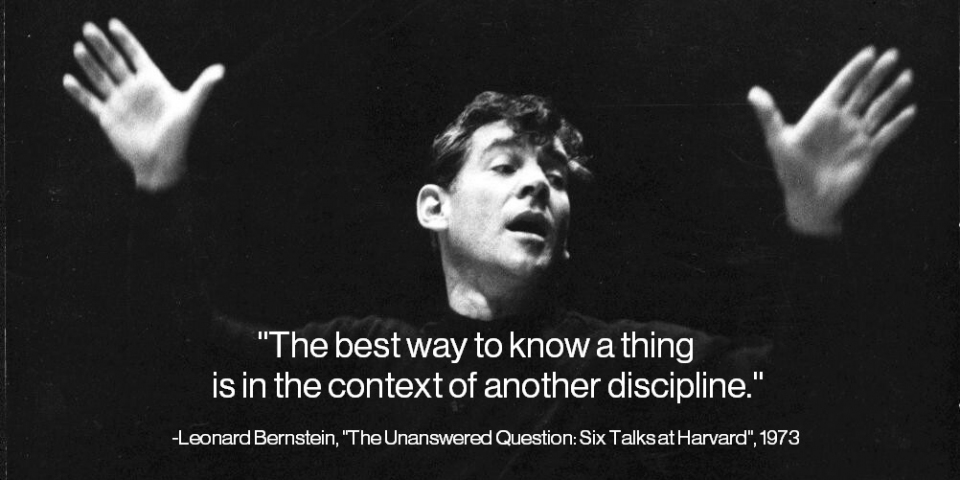
ARTFUL LEARNING® stimulates and deepens academic learning through the arts

Link: https://leonardbernstein.com/artful-learning

Hero Image

Artful Learning is a transformational learning model that empowers educators to use the arts and the artistic process to awaken and sustain the love of learning for all students. Based on over twenty years of intensive collaboration and refinement, field research and implementation with leading educators, researchers and practitioners of the model, the Artful Learning Sequence and Model is a framework that educators can use to revitalize their curriculum and their teaching practice.

Grounded in the artistic process, this extensive, research-proven professional development program gives educators the tools to apply the Artful Learning methodology over a three-year implementation process, ultimately building a sustainable, thriving learning community.

Initiated by American music icon Leonard Bernstein and realized by thousands of people around the nation, Artful Learning is changing the landscape of teaching and learning. Bernstein's vision was to use music and the other visual and performing arts as a means of instilling a lifelong love of learning in students. Artful Learning embeds the arts within the learning process through a carefully researched, concept-based, interdisciplinary model that has proven to increase comprehension in students as well as improve academic achievement.

https://vimeo.com/196328075

The Artful Learning Model (narrated by Alexander Bernstein) from The Leonard Bernstein Office on Vimeo.


Wednesday, October 14, 2015

What is Critical Thinking

When I started my BA in Fine Art the subject area I found interesting but baffling was Critical Studies. No one really explained to me what CS was about, to me it was a mix of contextual studies and art history with a bit of philosophy thrown in. No one really explained that it was all about Critical Thinking but what is Critical Thinking?

Here is one definition:-
Critical thinking is the ability to think clearly and rationally. It includes the ability to engage in reflective and independent thinking. Someone with critical thinking skills is able to do the following: understand the logical connections between ideas. Link

And another:-

Critical thinking is the process we use to reflect on, access and judge the assumptions underlying our own and others ideas and actions. Link

Ok, that's the what and the why how about the how? As is so often my experience in education you are told what and why but never how. How do you think reflectively and independently?

Well a BA, an MA and half a PhD further down the learning road I think I may have found the answer: Socratic Questioning!

What is Socratic Questioning? To answer the question the best place to start is my favourite PhD mentoring Blog, The Thesis Whisperer where Dr Inger Mewburn, Director of research training at the Australian National University, doles out words of wisdom and support for flagging PhD students. Link

Thursday, May 28, 2015

Zotero Support: How to back up your Zotero library

I nearly had a heart attack this morning when I thought I had lost my Zotero database after resetting Firefox to its default settings. However fortunately it synced to the online backup and all was well but it made me realise that it was a long time since I had done a local backup. Here is a useful link from the Zotero website to guide you through the process of making a  backup.

This link is taken from the Zotero website, click the link or the image to go directly to the page...

  1. To back up your Zotero library you will need to locate the Zotero data directory where your Zotero data is stored on your computer. To do this click on the actions button (gear icon) in the Zotero toolbar and select preferences:


Wednesday, April 15, 2015

First Day at School Photograph - PhD Project

First Day at School Photomicrograph and Legend on Verso

If the information written on this photograph is correct this is a snapshot of me aged 9 in school uniform taken on the occasion of my first day at school. The photograph was found in one of my mothers many photograph albums. The above reproduction of the photograph shows a caption on the reverse of the photograph in her handwriting.

I am shown standing alongside the Prefab in which we had lived since 1947.The Prefab was on the Belle Vale estate on the edgelands of Liverpool between Childwall and Woolton. The estate of 1500 prefabricated buildings was built to replace the housing stock destroyed during the war. They were intended to house families with one or more children. We are about to move house to Allerton and I was about to move schools.

This photograph is the basis of my art practice research based PhD thesis. My research is concerned with the snapshot photograph and its relationship with memory. The thesis endeavours to answer the question, why do we take snapshots. I am using this photograph as a lens through which to explore this question.

My research is based on an exhibition which takes this photograph as its central theme. Part of the exhibition explores the snapshot pose as represented in this photograph. I am interested in the banality and repetition of the pose in such snapshots and I am curious to understand if there is a fundamental reason why, as individuals, we take such similar snapshots.

I have set up a Facebook page with a view to collecting together at least 50 photographs that reflect the theme "First Day at School". These photographs, with the owners permission, will be used as the basis for an installation within my exhibition.

I hope that people will participate in the project by digging into their shoe boxes, albums and on-line archives to send me copies of snapshots of themselves, offspring, family and or friends, taken on their" First Day at School", or any similar photograph.

I have created a Facebook page specifically for this project. Photographs may be posted on the Project page or your Facebook page or they may be sent via a personal message or as an email attachment.

Wednesday, April 1, 2015

PhD Exhibition Draft Proposal

Mock up of Exhibition Space as Camera Obscura

YouTube Video of the Camera Obscura idea for the Exhibition


The video show a simulation of a moving scene of the exterior view from the exhibition space projected by means of a lens embedded in a blanked out window onto the opposite wall of the room to simulate a Camera Obscura. In reality the movement in the image would be limited to people walking past and any movement in the foliage.

The concept behind the installation is a simulation of the originary technicity of the photograph when Henry Fox Talbot viewed the scene of Lake Como from the balcony of his hotel room on the screen of his portable Camera Obscura and dreamt of a way of fixing the image he saw by capturing the light or by painting with the light as he put it. His sole intention being to remember the spectacular view and to be able to share it with others on his return home. The originary moment is contrasted with the reality of his dream, the banal snapshot photograph. Which is represented here by the negative space of a classic snapshot pose, "The first day at school" snapshot.

Monday, March 30, 2015

"The Wayback Machine" - Archive.org - a resource you should be aware of...

https://archive.org/

Internet Archive is a non-profit library of millions of free books, movies, software, music, and more...

The Internet Archive also known as "The Wayback Machine" is a San Francisco-based non-profit digital library with the stated mission of "universal access to all knowledge". It provides free public access to collections of digitized materials, including websites, music, moving images, and nearly three million public-domain books. As of October 2012, its collection topped 10 petabytes. In addition to its archiving function, the Archive is an activist organization, advocating for a free and open Internet.